Image


The Master of Arts in History build on your undergraduate studies and allow you to specialize in a particular historical period, region, or theme. With rigorous coursework, research opportunities and close mentorship from faculty, you'll develop the skills needed to succeed in a wide range of careers.
Graduates of 性福五月天鈥檚 Master of Arts degree in History are poised for impactful careers in a variety of fields, including academia, research, public history, and cultural institutions. With advanced training in historical analysis and research methodologies, alumni can become university professors, historians in government or nonprofit organizations, or curators in museums and archives. The program鈥檚 emphasis on critical engagement with historical texts and contemporary issues prepares graduates to contribute to public discourse, policy-making, and educational initiatives, making them valuable assets in roles such as historical consultants, policy advisors, and educational program directors.
The Master of Arts degree in History offers students the opportunity for advanced study in a variety of areas. Coursework emphasizes interpretation, methodology and original research. A student's program of study allows for the opportunity to conduct historical inquiry, research and analysis at the highest level. While students will be able to develop a core competence in their chosen field study, they will also study the histories of regions and times far removed from their central interests. Students may also pursue interdisciplinary work in cognate fields composed of courses in outside disciplines.
Students who anticipate continuing their graduate study beyond the M.A. degree should pursue one of the thesis tracks. Those who choose the thesis option, which is required of students on graduate assistantships, will produce a thesis based on original primary source research that engages a historiographically significant research question. Non-thesis options are available for those who do not expect to go on to doctoral work.
The program develops graduates who are educated scholar-citizens committed to historical empathy and in possession of critical thinking and communication skills honed by rigorous training.
For more information about graduate admissions, visit the graduate admission website. For more information on international admissions, visit the international admission website.
Students who have not earned a Bachelor of Arts degree in History are eligible to apply for admission if they have completed 12 credit hours of upper-division history courses (with a minimum 3.300 GPA).
Applications that include AI-generated goal statements or writing samples will be rejected.
International applicants who do not meet the above test scores may be considered for conditional admission.
Graduates of this program will be able to:
On This Page
| Code | Title | Credit Hours |
|---|---|---|
| Major Requirements | ||
| HIST 61002 | HISTORIOGRAPHY (min B- grade) | 3 |
| HIST 61070 | WRITING SEMINAR IN HISTORY (min B- grade) | 3 |
| 1 | 12-15 | |
| Colloquia in History Electives, choose from the following: (min B- grade in all courses) | 6 | |
HIST 62000 | READINGS IN EARLY MODERN HISTORY | |
HIST 62070 | AMERICAN HISTORY FROM PRECONTACT NATIVE AMERICA THROUGH THE CIVIL WAR | |
HIST 62071 | AMERICAN HISTORY FROM THE CIVIL WAR TO THE PRESENT | |
HIST 62285 | AMERICAN INTELLECTUAL AND CULTURAL HISTORY SINCE 1877 | |
HIST 62300 | MAJOR READINGS IN THE IMMIGRATION AND MIGRATION HISTORY OF THE UNITED STATES | |
HIST 62325 | MAJOR READINGS IN ASIAN AMERICAN HISTORY | |
HIST 62326 | BETWEEN PLOWS AND SWORDS: U.S.-CHINA CULTURAL RELATIONS SINCE THE LATE 1700S | |
HIST 62345 | IMAGES AND IDENTITIES IN US FOREIGN RELATIONS | |
HIST 62350 | REVOLUTION AND REFORM: THE DEPRESSION ERA AND THE TRANSFORMATION OF AMERICAN SOCIETY | |
HIST 62360 | MARGINALITY AND POWER: HISTORY FROM BELOW | |
HIST 62385 | HIGH-LIFE HISTORY: AFRICAN URBAN CULTURAL HISTORIES | |
HIST 62400 | THE LENS OF WAR: AMERICAN HISTORY THROUGH THE STUDY OF THE MILITARY | |
HIST 62405 | NATIVE WESTS | |
HIST 62415 | RELIGION AND VIOLENCE IN THE MODERN WEST | |
HIST 62420 | POLICE AND POLICED IN THE U.S. 19TH AND 20TH CENTURIES | |
HIST 62475 | MARXIST REVOLUTION IN VIETNAM | |
HIST 62485 | THE CIVIL WAR AS EXPERIENCED AND REMEMBERED | |
HIST 62500 | REGIONAL IDENTITY AND OHIO HISTORY | |
HIST 62505 | SOCIAL MOVEMENTS IN THE 19TH-20TH CENTURY RUST BELT | |
| Culminating Requirement | ||
| Choose from the following: | 3-6 | |
HIST 69199 | THESIS I 2 | |
HIST 69399 | CAPSTONE IN HISTORY | |
| Minimum Total Credit Hours: | 30 | |
Students may count a maximum of 3 credit hours of HIST 60092 toward the degree no matter their specific program choice. Students selecting the thesis option must complete 12 credit hours of electives. Students selecting the capstone option must complete 15 credit hours of electives. Students may elect to take two graduate-level courses outside of history — if chosen, they must take history graduate courses in two of the following three areas: (1) American history, (2) European history, (3) global history (non-Western). Students electing not to take non-history courses must include coursework in each of the following areas: American history, European history and global history (non-Western).
Students selecting the thesis option must demonstrate a reading knowledge of one or more foreign languages if their advisers determine that it is necessary for research. Students must continually register for HIST 69199 for maximum 6 credit hours toward the degree. Students may need to register for HIST 69299 to complete the thesis requirement; however, those credit hours do not, whatsoever, count toward the degree.
| Minimum Major GPA | Minimum Overall GPA |
|---|---|
| - | 3.000 |
Please contact Graduate Coordinator, Dr. Lindsay Starkey, for the Handbook.
The list of History MA theses completed since 1936.
Decide why you want to attend graduate school, and what you hope to do with your degree. If you are thinking of pursuing an MA, do you hope to continue on to a PhD? Do you hope to work in a museum or archive, or teach at the High School level?
Decide what basic area you would like to focus on in your studies. Generally, people come to a graduate program with some sense of where their interests are, geographically, thematically and temporally. You do not need to have a topic for a thesis or dissertation in mind, but you should be able to say something such as: 鈥淚 am interested in the daily lives of factory workers in Ohio in the mid-20th century鈥� or "I would like to research Thai nationalism in the twentieth century" or 鈥淚 would like to work on tactics of woman suffragists in the progressive era鈥�. These interests are not set in stone, and our graduate students often find that their interests change by the time they begin to write their thesis, but they will give you and us a sense of whether our program is likely a good fit for your interests.
Review our History Department faculty. Any faculty member on the Kent campus can serve as your advisor. You will work with many faculty members during your time at Kent and you may choose to work with faculty in other departments at 性福五月天 if you have an interdisciplinary focus, but your primary faculty advisor must be a History Department faculty member. Though you will not formally select an advisor until the second semester of the program, you need to indicate on your application who you would be likely to work with. You may want to read scholarship published by faculty members who you are considering working with to get a better sense of their work. Even if you are planning to take the non-thesis track in our program, so will not have a formal advisor, you should consider who you would like to work most closely with in the department.
Once you have ideas of a person or people you may want to work with in our program, you should reach out to our program. It is customary to contact our graduate coordinator first, though you can also reach out to a potential supervisor directly if you have questions that you think they could best answer.
Before you plan to apply, you should reach out to potential writers of letters of recommendation and ask if they would be willing to write you a letter for our program. Letter writers should be people who are familiar with your academic work, and who are capable of judging whether you would be likely to succeed in a graduate program in history. Usually, these letters are written by history faculty members with whom you have taken classes. Occasionally they are written by faculty members from other disciplines, or by people who have supervised you in history-related jobs or internships. You should not submit letters written by people unfamiliar with your academic work or unable to judge its quality such as former employers from non-history-related jobs or people who know you socially. It is not unusual for people who have been out of school for a few years to reach out to people who taught them several years ago and ask for a letter.
You should also decide what you might want to submit for a writing sample. This should be at least 12 pages long, should have a thesis, and should draw on both primary and secondary sourcing. Usually, this is a history research paper. This paper should demonstrate that you can write clearly and well, that you can develop an interesting thesis, and that you can defend it with a combination of well-selected primary and secondary research. You can feel free to improve on a paper that you have already submitted for another purpose before using it as your writing sample. Applications including AI-generated writing samples will be rejected.
This document should be around 500 words long and should explain to us why you would like to study in our department. We use the document primarily to determine whether you are a good fit for what we have to offer, though the Statement of Purpose also gives us a sense of your writing, research, and reasoning skills. The statement of Purpose should tell us a bit about who you are as a scholar, what you are interested in studying, why you think 性福五月天 is a good place for you to pursue your degree, why your interests are a good fit for our program鈥檚 strengths, which faculty member or members you are interested in studying with and why, and what you hope to do with your degree.
If there are any elements of your application that you think require explanation, this is a good place to provide that explanation.
Applications including AI-generated statements of purpose will be rejected.
Some students attend our graduate school part time, working towards a degree, and others take classes with us for their own sake, without pursuing a degree. Because most of our classes are in the evening, it is often possible to take a class while working.
If you plan to pursue a degree part time, you should apply to the program just as you would for full-time, but reach out to the graduate coordinator to discuss institutional time-to-degree limitations and other logistical issues.
If you want to take a graduate class without pursuing a degree, we will still need to evaluate your qualifications to assess whether you are prepared to succeed in the class, but you will apply through a less competitive "Graduate Non-Degree Student" process.
If you are considering pursuing a graduate degree but have been out of school for a while and so are finding it challenging to put together a strong application, for instance, you might consider applying as a non-degree student, taking a class or two to introduce yourself to the program, and then applying to the degree program. Classes taken as a non-degree student will be retroactively applied to a degree, should you later be admitted to the program.
Students taking classes part time or as non-degree students are not eligible for funding.
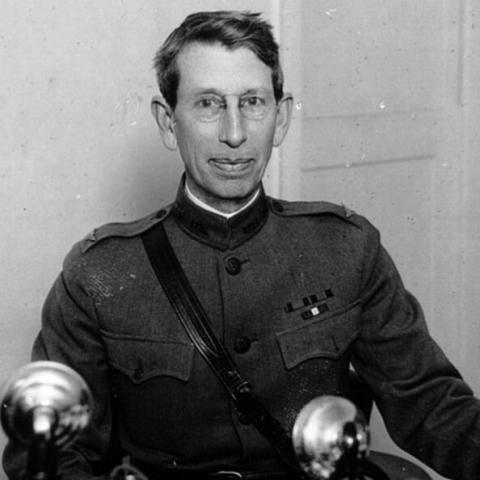
Matthew Vajda, a doctoral student in the Department of History at 性福五月天 University, has been selected as one of only two recipients of a coveted $15,000 fellowship stipend from the for the academic year 2023-2024.
What's Next
Be one step closer to joining our Golden Flashes family!